
Watergekoelde airconditioning
Een watergekoelde airco huren bij CSrental? Wij verhuren watergekoelde airco units in verschillende vermogensklassen, ideaal voor binnenopstelling waar buitenruimte ontbreekt of geluid een rol speelt. Onze monteurs koppelen de unit aan onze chillers of uw bestaande koelkring.
Hoe werkt een watergekoelde airco?
Hoe werkt een draagbare watergekoelde airconditioner? De airconditioner bestaat uit een binnen- en buitenunit, verbonden door een verbindingsslang. De aansluitslang zorgt voor de watercirculatie tussen de binnen- en buitenunits. De aansluitslang circuleert alleen water en geen andere koelvloeistoffen.
De binnenunit van de watergekoelde airconditioner bestaat uit een verdamper en een condensor. De binnenunit zorgt voor koeling in tegenstelling tot de buitenunit die warmte afvoert. Bij een installatie met een watergekoelde airconditioner is het mogelijk om de aansluitslang door muren, over plafonds, door luchtkanalen of over de grond te leggen zonder dat er koelwerkzaamheden moeten worden uitgevoerd. Het voordeel hiervan is dat de watergekoelde airconditioner op elk moment snel en probleemloos kan worden ingezet.
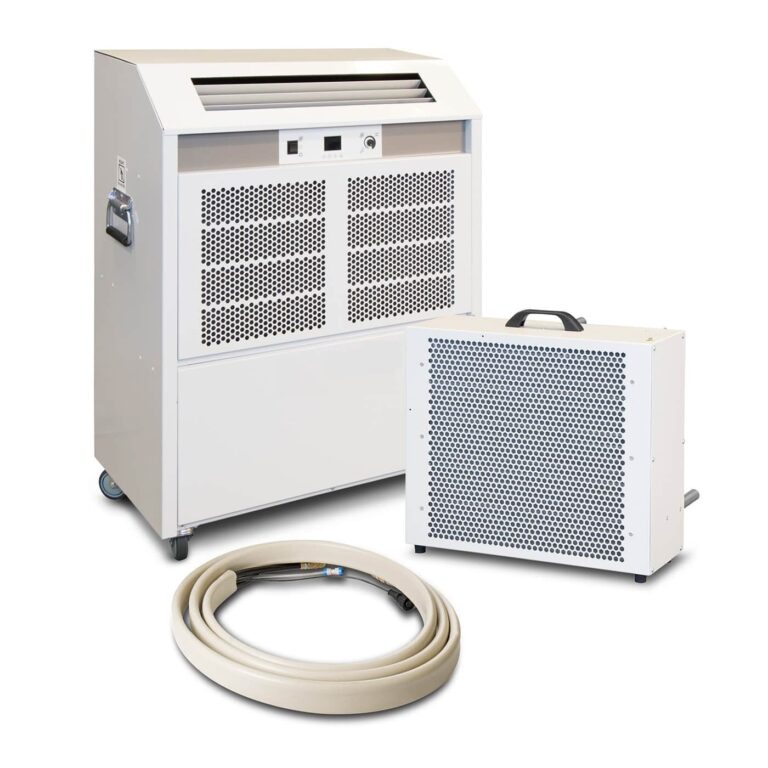
Airconditioning ACT-7
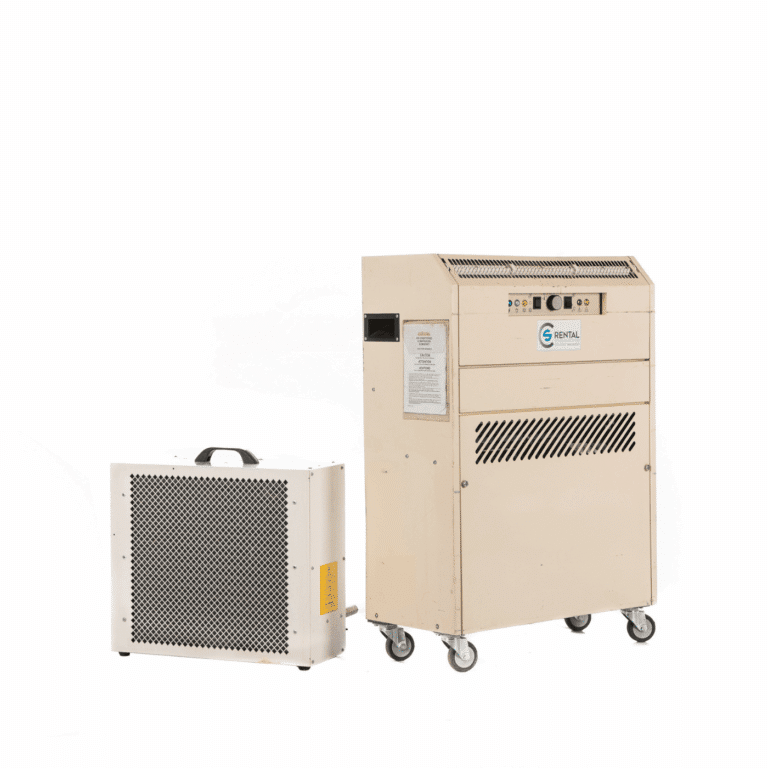
Airconditioning PT-4500 W
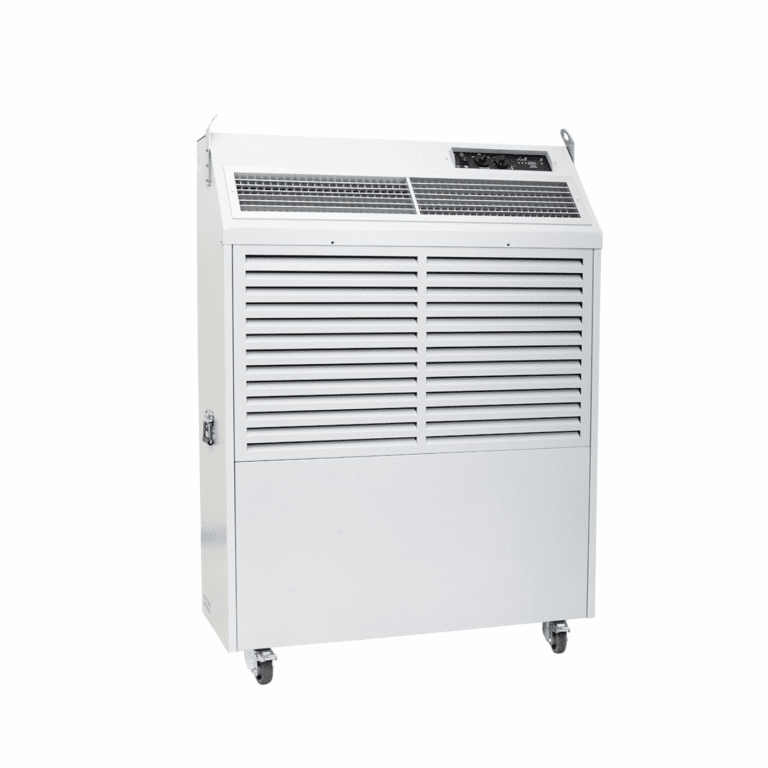
Airconditioning ACT-15
Uitvoering watergekoelde airconditioner
Zoals uitgelegd bij de werking van een watergekoelde airco, werkt de mobiele watergekoelde airco door middel van een verbindingsslang tussen een binnen- en een buitenunit. Deze samenstelling zorgt ervoor dat warmte uit de ruimte wordt afgevoerd en er in de betreffende ruimte een aangenaam klimaat ontstaat.
Naast de standaard uitvoering van de watergekoelde airconditioner is er ook een uitvoering die draait op vers water. De watergekoelde airco PT FW is een model dat direct op de watertoevoer wordt aangesloten, de warmte wordt dan afgegeven aan het koude water. Deze variant van de mobiele watergekoelde airco heeft voldoende waterdruk om zelfs leidingen van meer dan 100 meter lang op aan te sluiten.
Waarom een watergekoelde airco huren bij CSrental?
- Hoog koelvermogen op een compacte opstelplaats
- Geschikt voor binnenopstelling, geen warme luchtuitstoot
- Combineerbaar met onze chillers voor een totaaloplossing
- Plaatsing, aansluiting en inregeling door eigen monteurs
- Levering in heel Nederland, binnen 1 dag
Wanneer kiest u voor watergekoelde airco?
In datacenters, productieruimtes en kantoorpanden waar veel koelvermogen nodig is en buitenopstelling lastig is, is een watergekoelde airco vaak de beste keuze. De warmte wordt afgegeven aan een waterkringloop in plaats van aan de buitenlucht. Daarmee blijft de buitengevel rustig (geen condensors aan de muur of op het dak) en is geluidsoverlast minimaal.
Veelgestelde vragen over watergekoelde airconditioning (FAQ)
Wat is een watergekoelde airconditioner en hoe werkt deze?
Een watergekoelde airco bestaat uit een binnen- en buitenunit die via een waterslang met elkaar zijn verbonden. De binnenunit zorgt voor koeling, terwijl de buitenunit de warmte afvoert via het circulerende water. Er worden geen koelmiddelen gebruikt, waardoor de installatie eenvoudig en veilig is, ideaal voor tijdelijke koeling in kantoren, serverruimtes of winkels.
Wat is het verschil tussen luchtgekoelde en watergekoelde airco’s?
Een luchtgekoelde airco voert warmte af via lucht, terwijl een watergekoelde airco dit doet via water. Hierdoor kan de slang van een watergekoelde airco over langere afstanden worden gelegd zonder rendementsverlies. Dat maakt ze geschikt voor situaties waar een buitenunit niet mogelijk is of waar afvoerlucht ongewenst is.
Wanneer kies ik voor een watergekoelde airco?
Een watergekoelde airco is ideaal als u snel tijdelijke koeling nodig heeft zonder installatiewerk. Denk aan gebruik in serverruimtes, vergaderruimtes, meetkamers of tijdelijke kantoorlocaties. De units zijn direct inzetbaar en kunnen eenvoudig worden aangesloten, ook op plekken zonder luchttoevoer naar buiten.
Wat is een ‘FW’ (vers-water) uitvoering en wanneer gebruik ik die?
Een FW-model, zoals de PT-4500 FW, wordt rechtstreeks op de waterleiding aangesloten. De warmte wordt dan afgevoerd via het koude leidingwater. Deze uitvoering heeft geen buitenunit nodig en is geschikt voor langere trajecten of binnenruimtes waar geen doorvoer mogelijk is.
Hoe bepaal ik welke koelcapaciteit ik nodig heb?
De benodigde capaciteit hangt af van de grootte van de ruimte, de warmtebronnen en de gewenste temperatuur. Wilt u zeker zijn van de juiste keuze? Onze adviseurs berekenen dit graag voor u.
Helpen jullie met advies en installatie?
Ja, ons team ondersteunt u bij het kiezen van het juiste model, de benodigde capaciteit en de installatie. Zo bent u verzekerd van een betrouwbare en efficiënte koeloplossing die aansluit bij uw project. Neem gerust contact op voor advies op maat.